
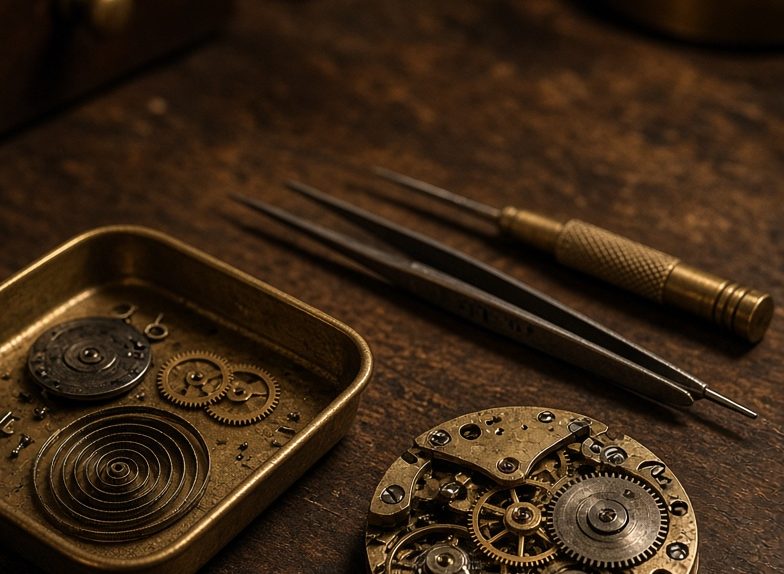
Repairing a mechanical watch can be a complex and time-consuming process, requiring specialized tools and expertise. Here is an overview of the process of repairing a mechanical watch and some common issues to look out for:
- Diagnosis – The first step in repairing a mechanical watch is to accurately diagnose the issue. This may involve disassembling the watch and inspecting the movement, as well as testing various components to determine the cause of the problem.
- Cleaning and lubrication – Once the issue has been identified, the watch will need to be cleaned and lubricated. This involves removing dirt, grime, and old lubricant from the movement and replacing it with fresh lubricant to ensure that all components are running smoothly.
- Inspection and replacement of worn parts – During the repair process, a watchmaker will also inspect all components of the watch and replace any worn or damaged parts. This may include gears, wheels, bearings, or other mechanical components.
- Assembly and testing – Once all repairs and replacements have been completed, the watch will be reassembled and tested to ensure that it is running accurately and efficiently.
Some common issues to look out for when repairing a mechanical watch include a broken mainspring (the spring that powers the watch), a damaged escapement (the component that regulates the movement of the watch), or worn gears or wheels. These issues can affect the accuracy and reliability of the watch and will need to be repaired or replaced by a qualified watchmaker.
In summary, repairing a mechanical watch is a complex process that requires specialized tools and expertise. It involves accurately diagnosing the issue, cleaning and lubricating the movement, inspecting and replacing worn parts, and reassembling and testing the watch to ensure it is running smoothly.
Most jobs start with the same four suspects: a tired or broken mainspring, a dirty or dry train, an escapement that is out of adjustment or chipped, and rust. Crowns and stems get bent in the mail. Crystals crack. Dials hairline. None of those are mysterious. They are just easier to fix before someone oils a dirty movement and calls it done.
A repair estimate should separate “make it run” from “make it correct.” Replacing a spring in a common American 16s is a known task. Finding a matching pallet fork for an odd Swiss orphan is not. That is the conversation to have before the watch is in pieces. If you only needed to know whether the gold-filled case was worth more than the movement, say that first. Honest triage is part of the work.
Have a pocket watch that needs attention? The Good Old Times offers
free, no-fee service estimates (no charge if you decide not to proceed), local drop-off in
Mississauga by appointment, and Canada-wide service by mail — every repair backed by a
3-month warranty. Get a free estimate →
Also browse: fully serviced watches for sale ·
pocket watch guides (Collector’s Corner).