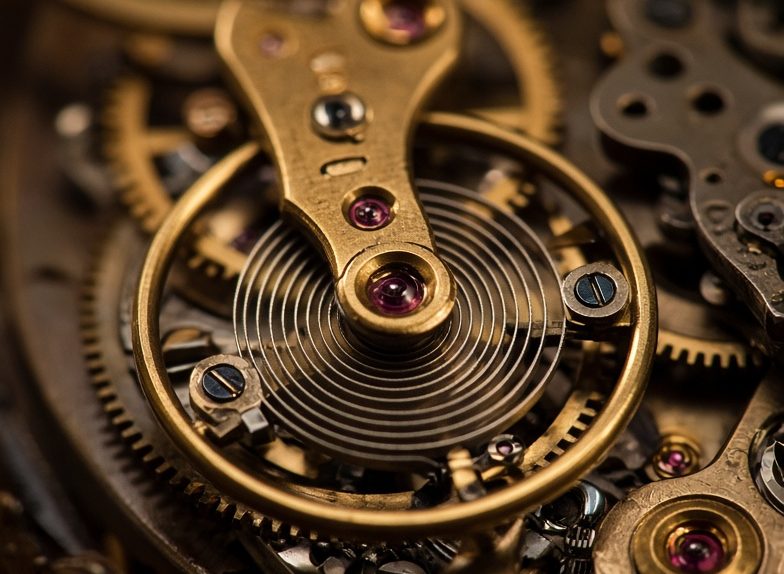
The accuracy of an antique or vintage manual wind up mechanical wristwatch can vary widely depending on a number of factors such as the age, condition, and quality of the watch. Generally, an antique or vintage mechanical watch from the early 20th century may have an accuracy of -10 to +30 seconds per day, although some high-end watches could achieve much better accuracy, sometimes within a few seconds per day, while budget watches may have an accuracy of +/- a few minutes per day.
The accuracy of a mechanical watch is primarily determined by the quality of its regulating system, which includes the balance wheel, hairspring, and escapement. The balance wheel oscillates back and forth at a specific rate, controlled by the length and tension of the hairspring. The escapement releases the energy from the mainspring to the balance wheel at precise intervals, ensuring that the watch maintains a consistent rate of timekeeping.
Over time, the accuracy of a mechanical watch can be affected by a number of factors, including changes in temperature, changes in the watch’s position or orientation, and wear and tear on the movement components. Regular servicing and maintenance can help to keep a mechanical watch running accurately over the long term. However, it’s important to note that antique or vintage mechanical watches may not achieve the same accuracy as modern quartz or electronic watches.
Expect a range, not a quartz number. A healthy vintage manual-wind wristwatch after service might sit somewhere around half a minute a day either way; a high-grade piece can do better; a worn budget caliber may do worse. Pocket railroad grades were held to a much tighter weekly rate when they were in service, which is a different job than a 32 mm dress watch from the 1950s.
Rate changes with position, temperature, and how wound the spring is. That is why “adjusted” exists on better movements. If your watch gains two minutes a day after sitting overnight but is closer when worn, say so — that is useful diagnosis. Regulation can bring a clean movement into a wearable range. It cannot invent accuracy in a movement whose pivots are already oval. Service first, then argue about seconds.
Have a pocket watch that needs attention? The Good Old Times offers
free, no-fee service estimates (no charge if you decide not to proceed), local drop-off in
Mississauga by appointment, and Canada-wide service by mail — every repair backed by a
3-month warranty. Get a free estimate →
Also browse: fully serviced watches for sale ·
pocket watch guides (Collector’s Corner).