
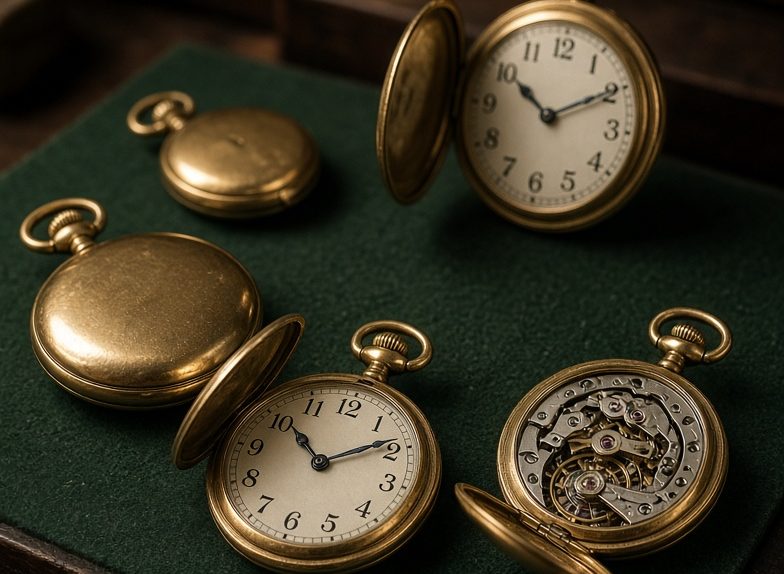
Here’s a structured overview based on historical data and classifications:Railroad Grade and Approved Pocket Watches Table
| Brand | Model | Size | Features | Approval Status |
|---|---|---|---|---|
| Hamilton | 992B | 16s | 21 jewels, lever-set, double roller, adjusted 5 positions | A |
| Ball Watch Co. | Official RR Standard | 16s, 18s | 17, 19, 21, 23 jewels, adjusted 5 positions, lever-set | A |
| Elgin | B.W. Raymond | 16s | 19 jewels, lever-set, adjusted to temperature and positions | A |
| Waltham | Vanguard | 16s | 23 jewels, lever-set, gold jewel settings, double roller | A |
| Illinois | Bunn Special | 18s, 16s | 21 jewels, lever-set, adjusted to 6 positions, temperature | A |
| Hampden | Special Railway | 18s | Lever-set, 19 jewels, adjusted to temperature and isochronism | A |
| Howard | Series (Nickel 18-size New 1896 Model) | 18s | High-grade, adjusted, lever-set | C |
| South Bend | 227 | 16s | 21 jewels, lever-set, railroad grade but less common | E |
| Santa Fe Watch Co. | (Various Models) | 16s | Following general railroad standards of the time | C |
Key to Approval Status:
- A: Perpetually qualified for railroad service, meeting all future modifications in standards.
- C: Initially approved but might be disqualified in later eras due to changing standards; often grandfathered in if already in service.
- E: Generally accepted for railroad service by collectors but might lack one or more features for official approval during its era.
Notes:
- Size: Refers to the Lancashire Gauge, where 16s and 18s are common sizes for railroad watches, translating roughly to 43.18 mm and 44.86 mm respectively.
- Features: Include requirements like lever-set mechanisms to prevent accidental time changes, high jewel counts for reduced friction, and adjustments for accuracy across different positions and temperatures.
- Approval: The status reflects how these watches were viewed in terms of railroad use, with ‘A’ being the most universally accepted across time.
This table provides a snapshot based on historical data and classifications. Remember, the distinction between “railroad grade” and “railroad approved” can be nuanced, with “grade” often referring to the quality and specifications of the watch, while “approved” indicates it was officially sanctioned for railroad use during its era. Over time, standards evolved, and what was once approved might not meet later criteria, hence the classification system.
Use the table as a shortlist, not a shopping order. A Hamilton 992B with a hairline enamel dial and a correct lever-set movement is a more serious watch than a “railroad style” case around an anonymous 7-jewel. Ball, Elgin B.W. Raymond, Waltham Vanguard, and Illinois Bunn Special sit in the same conversation for the same reason: they were built to be inspected, not merely to look official.
Status letters (A, C, E) are collector shorthand for how later standards treated a model. They are useful when two watches look similar and you need to know which one stayed legal as rules tightened. They are not a price list. Condition, originality of the dial, and whether the watch has been serviced recently will move the number more than the letter. If you are comparing two examples, send both movement photos; the plates settle arguments faster than the auction title.
Have a pocket watch that needs attention? The Good Old Times offers
free, no-fee service estimates (no charge if you decide not to proceed), local drop-off in
Mississauga by appointment, and Canada-wide service by mail — every repair backed by a
3-month warranty. Get a free estimate →
Also browse: fully serviced watches for sale ·
pocket watch guides (Collector’s Corner).